 The lanes feel beautiful now with the larks above and the morning sun.
Monday, May 17, 2010


easy to hear but hard to see

 a sky lark singing with all its might, barely visible against the clouds (it is a tiny speck right in the centre of the top picture) and brought a bit closer by the zoom. Unfortunately, our new trick of taking fast photos at very high ISO values doesn't work so well with our old camera.
Saturday, May 15, 2010
purple orchids

early purple orchids have appeared in large numbers on the drive into Duchy College. It looks as if it might be a good year for orchids even though we couldn't find any at all on Thursday in Greenscoombe meadows. The little blue flower is germander speedwell, and there is some sorrel about to flower
Thursday, May 13, 2010
cloudy Tamar
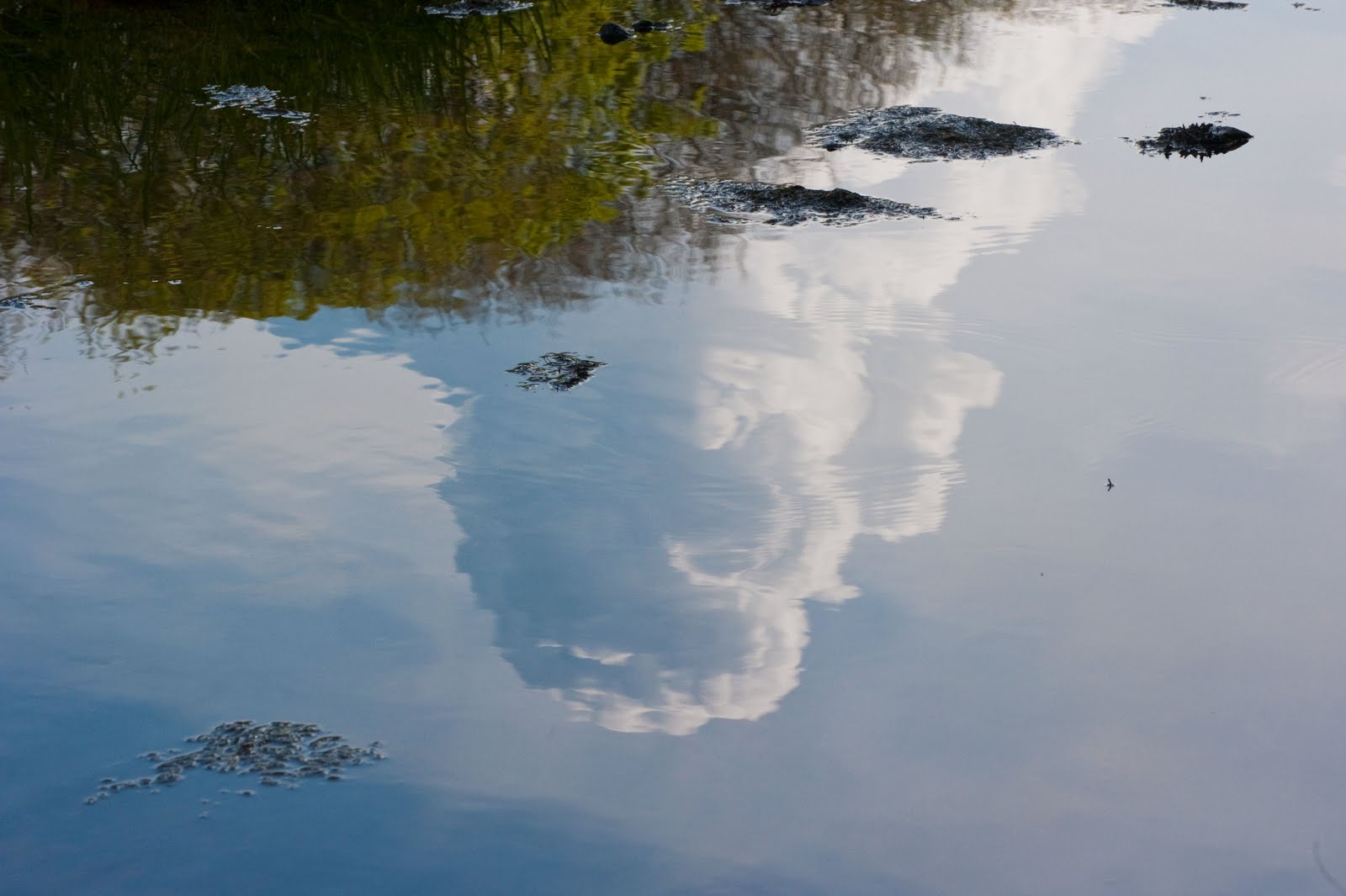 a quiet day on the Tamar, and below the inaptly named grey wagtail, foraging by the side of the road rather than by fast running streams where they usually live.
Tuesday, May 11, 2010


Sunday, May 09, 2010
lady's smock or cuckoo flower or mayflower or...

 two pictures of the local variants of the cuckoo flower (aka lady's smock etc). As I have described before the normal mayflower is a simple but pretty flower with four petals. these variants are double flowers or hose in hose varieties said by Richard Mabey in Flora Britannica (page150) to be common in parts of Devon.
Below is a picture of marsh marigolds (aka Kingcups, Mayflower, May-blobs, Mollyblobs, Pollyblobs, Horseblob, Water-blobs, water-bubbles, Gollins, the publican (? by whom). Mabey (see above) states that it one of our oldest native plants surviving the glaciations and flourishing after the last retreat of the ice, in a landscape inundated by glacial melt waters. It feels today as if the next ice age is about to start.

Subscribe to:
Posts (Atom)