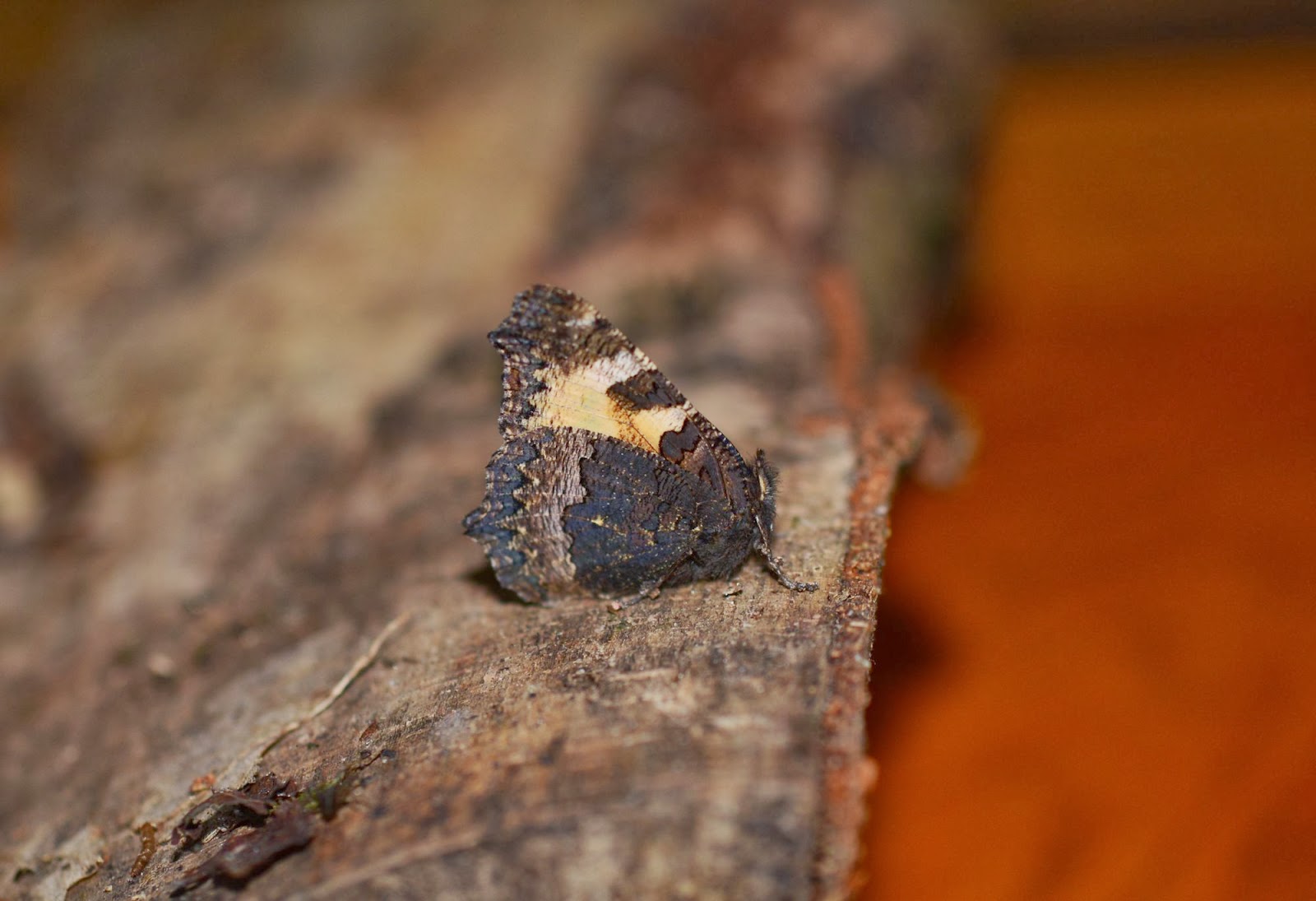
Showing posts with label butterflies. Show all posts

Monday, July 18, 2016

two rarities


At last summer has arrived with some warm sunshine. The meadows are full of wild flowers. This is a heath fritillary (female) feeding on cornish bladderseed, two rarities in one.


cornish bladderseed

Sunday, June 05, 2016

at last, a green hairstreak butterfly


I have been looking for this little green butterfly (the green hairstreak) for the last five years, and at last today in Greenscombe woods, I spotted this one and was able to photograph it. Hooray! And there were a lot of heath fritillaries about

and lots of heath spotted, marsh and lesser butterfly orchids, and a crab spider waiting for an unsuspecting pollinator.

Sunday, August 31, 2014

the admiral's tongue


There are dozens of our big late summer butterflies around, gathering on the butterfly bush, up to 6 or 7 at a time on one flower head. And there was one holly blue in the garden today.


Thursday, August 07, 2014

gardeners' nightmare

As was predicted last year, there is a developing plague of white butterflies. There are 6 small whites (and a tortoiseshell) on this one small lavender bush. There will be no brassicas left.

Sunday, August 03, 2014

Spot the butterfly


We saw two or three clouded yellows today, this is several weeks earlier than last year. Clouded yellows are usually migrants from southern Europe but I wonder if these are indigenous examples which have managed to breed last year and survived during the very mild winter. The meadow was full of large butterflies today, including these three silver washed fritillaries having a dog fight over Spot.


Sunday, July 27, 2014

cafe agrimony


It has been predicted recently that this will be a good year for peacock butterflies. They are attracted to hemp agrimony, a common wild flower locally and there were four on this one small patch to the side of one of the meadows at Greenscoombe. The moth below is a rosy footman (miltochrista miniata), described as 'local' in my reference book ie not that common everywhere. It is a very striking salmon orange colour.


Sunday, July 20, 2014

butterfly count

It is the start of butterfly count month (see link). The meadows were teeming with the usual mid July suspects, including dozens of small skippers (as above) meadow browns, ringlets and silver washed fritillaries. Very few red admirals and no tortoiseshells or peacocks. Five common blues which is definitely up on the last two years.

Wednesday, July 02, 2014

gathering 2

A wave of meadow brown butterflies is sweeping through the lanes, maybe it is going to be a very good month for butterflies.

Sunday, June 22, 2014

June treats


 a greater butterfly orchid


a tattered heath fritillary


a violet ground beetle


Wednesday, June 11, 2014

more from wimalford


large red damselflies mating (top), a small heath butterfly (middle), and a miniature forest of marsh lousewort growing in the moss overlying some very swampy ground (the lush green gives it away)

wimalford marsh

This is the marsh fritillary, feeding on a spotted heath orchid at Wimalford farm (see link). It is a rare butterfly and is under a lot of pressure because of loss of habitat and possibly climate change. We also spotted a small pearl bordered fritillary (below)


and a chimney sweep moth


Sunday, June 08, 2014

rainbow days


 red, green, yellow and blue, everything is appearing


 a tortoiseshell on ragged robin


  a small skipper on campion

 a female beautiful demoiselle (not that she needs to be told)

a yellow crab spider

the first common  blue of the year
and brown, black and white too.

fresh speckled wood

trouble

Sunday, May 04, 2014

green eyes

orange tip butterfly thoughtfully displaying both sides of its wings. Also on the wing today were peacocks, tortoiseshells, green veined whites, brimstones and damsel flies.

Thursday, April 17, 2014

keeping up with the longs

the first, rather tattered looking speckled wood of the year. These butterflies over winter as caterpillars or chrysalides, so this must be a newly hatched butterfly. It has certainly seen some rough times already.

Sunday, March 30, 2014

the importance of being yellow


A brilliant display of celandines on Broadgate lane, and a brilliant display of yellowness by a male brimstone.


Sunday, November 17, 2013

deep sleep


A tortoiseshell caught hibernating on a log from the wood shed. It is extremely well camouflaged in this situation by the seemingly drab pattern of the underside of its wings.

Thursday, October 10, 2013

very last of the summer wine


It was a brilliant if cool sunny day today, and there were several tortoiseshell and red admiral butterflies fluttering about, feeding before their long winter hibernation. There was also a crowd of small coppers (top picture), the last of several generations this year. Later generations are supposed to be larger but these were very small if bright butterflies. And there are still a lot of bumblebees around making honey while the sun shines.

Sunday, September 01, 2013

15 in one day 2


It was all getting a bit crowded. Bramble and knapweed have almost stopped flowering, and the meadows are full of devil's bit scabeous. The patches of scabeous were covered with a variety of pollinators getting their last top ups of the summer, drunk with nectar they were very docile allowing this sumptuous aerial view of a peacock.


15 in one day


We saw 15 species of butterfly today on our walk along the Inny, including several more clouded yellows. They always close their wings at rest, but the top picture shows quite clearly the black edging on the upper surface of the wings of these distinctive butterflies when seen on the wing.

Sunday, August 18, 2013

clouded arrival

Yesterday was a dreary wet day so I read the morning newspaper more thoroughly than usual. In it, Simon Barnes, sports writer and naturalist, wrote an article (link) in which he described the pleasure  of watching birds and butterflies with his young son, Eddie, who happens to have Downs.They are holidaying somewhere on the coast further west in Cornwall. He reported seeing several clouded yellows, an occasional migrant from Southern Europe, and not for the first time I felt quite envious of him. Lo and behold we saw several today on our walk, the first I have ever seen locally. They are very skittish and almost always fold up their wings at rest, which is a pity because the black edged pattern on the upper surface of the wings is quite striking.


There were also a lot of common (but not so common) blues around.