Saturday, August 20, 2011

Wednesday, August 17, 2011

more from the meadows


Spot taking a close look at some red bartsia, a semi parasite of grass. Maybe he has toothache (qv).The last flowers of the summer are coming out in a tangled profusion, including from the bottom up, water mint, birds foot trefoil, purple loosestrife, meadowsweet, and hogweed at the top


there was news this morning of a new initiative at Kew Millennium Seed Bank to generate seed of our native meadow plants (link). Nearly all of the plants mentioned grow locally except the harebell, although the ivy leaved harebell is found in local woods. The devil's-bit scabious is just beginning to flower (the violet flowers top left) in amongst the purple knapweed


Saturday, August 13, 2011

Fern brooch


The fantastic remnant of a darter dragonfly rests on a fern leaf like a swarovski jewel.

Thursday, August 11, 2011

muscovy sauce


Calstock viaduct at low tide, and below, in close up, a surprising resident.


Monday, August 08, 2011

for dog lovers only


her favourite toy(aka the Puppy)

meadowland


wrens flourish because there are so many insects in the meadows at this time of year. The knapweed is now the dominant flowering species locally. My eye caught this very pale bumble bee, it looks like a white tailed bumble bee but the other bands should be a brighter yellow so it may be another species.

a bird in the bush


the bushes are full of young birds although they are hard to see properly. This is a young wren. For small birds they make a lot of noise.

Sunday, August 07, 2011

it's that time of year again


It's the Flower show, it must be August again. It feels like the hand on a giant clock, ticking once a year. The criteria by which these apples came third are not clear; I would have eaten them.

the joy of flying

for some reason early this morning the paddock was full of martins flying around chasing each other and generally having FUN.

Tuesday, August 02, 2011

lane warfare


On our walk this evening the lane was full of red admirals and speckled wood butterflies. They seem to take possession and guard 5 or 10 metres of hedgerow, racing up and down and fighting off all intruders. The air was full of butterflies being aggressive, and this rather battered individual was taking a breather before lurching (appropriate word for this blog) off to do some more fighting. So much for the quiet life. More like boy racers.

Sunday, July 31, 2011

beauty and the beast


a crab spider has caught a meadow brown and is hauling it up to the flower head. Not all is beauty and light in the meadows.

knap hand

although it is common, as this photograph shows, knapweed brings a blaze of brilliant purple colour to the meadows in late summer (a prize to anyone who can name every flower in this photo).


 PS .... prizes are always photos of Spot :-)

silver washed out


There were a lot of silver washed fritillaries out today in the sun. They seem to prefer meadows and grassland that lie next to woods. They are large and powerful fliers and are usually quite skittish, but the top photo is of a female who was prepared to pose for me with the sun shining through her wings. The male in the lower photograph is feeding on hemp agrimony instead of the preferred food of brambles which have almost finished flowering.

Saturday, July 30, 2011

small and vulnerable


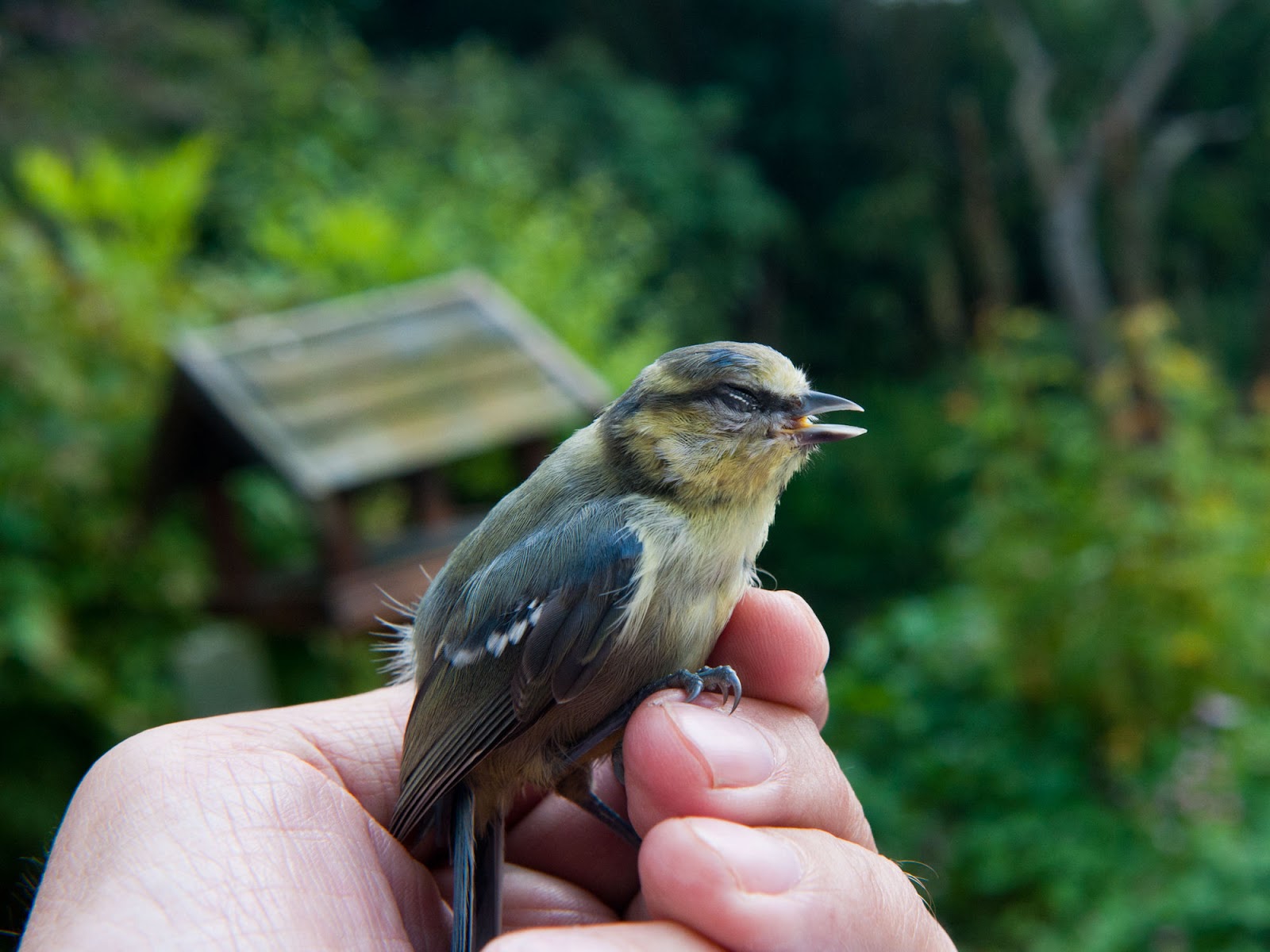
A very juvenile blue tit (only a very few blue feathers on its head) recovering from an encounter with a window. Although very shocked it eventually recovered enough to fly off.

high and mighty


if dogs were lords of the universe....

summer colours


On Rowden lane. Is there a hint of autumn in these colours?

Wednesday, July 27, 2011

a very shy visitor


Jays may be very noisy birds but they are also generally very shy, and only very occasionally come into our garden (see link). The local magpies were very unhappy about this intruder and tried to chase it off.


 We also spotted this magpie moth yesterday, although its colouration might suggest that leopard moth would be a better description.

Sunday, July 24, 2011

disappearing peacock


we are now in butterfly count fortnight, and the butterfly conservation group have reported an "alarming" drop in the number of peacock butterflies. So it was heartening that we saw 5 or 6 individuals this morning, once it had warmed up a bit. The bramble flowers on which a lot of bigger butterflies tend to feed have already come and gone this year, and the knapweed  has not quite come into flower yet so there seems to be a gap in available food for these insects. This butterfly is feeding on a species of thistle.

Tuesday, July 19, 2011

kings of their castles


a small skipper on a marsh thistle, and (after much discussion about little brown birds) a chiffchaff


Thursday, July 14, 2011

in the meadows


soft light and a myriad of spiders' webs filled the meadows early this morning, as did the chattering of a family of long tailed tits enjoying the warmth of the sun

Monday, July 11, 2011

occasional visitors


Another very occasional visitor to the peanuts is this nuthatch, adopting its characteristic upside down feeding posture, much to the surprise of the juvenile blue tit.

Saturday, July 09, 2011

butterfly news


just in time for the big butterfly count (see link) more species of butterfly are appearing; today in the meadows we saw large whites, small whites, meadow browns, ringlets, silver washed fritillaries, small skippers, and red admirals, in addition to the three above from the top a bright comma , a small copper, and a painted lady showing her under wear. No blues, tortoiseshells, brimstones or peacocks possibly because it was quite early in the morning.

a rare sight


We know that hedgehogs live in our garden but we only see them very occasionally at night. It is extremely unusual to see them ambling around in broad daylight like this one, completely unconcerned by our (four dogs and one person) return. The rain has brought out a lot of slugs so maybe this hedgehog was too busy snacking to notice the time of day.

Sunday, July 03, 2011

in greenscombe woods

It was a warm sunny day but not much to see apart from cornish bladderseed and the strange slender variety of betony that is only to be found in these woodland meadows.

just like a leaf


the first of the second generation of brimstones to appear this year. The first silver washed fritillaries have also appeared in the last few days

Saturday, July 02, 2011

five or six


the 3 main varieties of burnet moth are the five, narrow bordered five, and six spot. As far as I can tell this is the five spot (and only experts can tell the difference between this and the narrow bordered five spot). They are very striking in flight when they appear like a blurry ball of red (not black).


the middle  picture is of a heart and dart moth. The dart is the black streak, and the heart is the round brownish mark towards the edge of each wing. The bottom picture is of a silver y moth, a frequent migrant to Britain. The picture looks slightly blurred. This is because this moth has the habit of rapid trembling when at rest.


on the Inny


In the morning light the river looked like an impressionist painting today

Thursday, June 30, 2011

getting braver all the time

finding the peanuts irresistible, this juvenile woodpecker is prepared to come very close to the house

Wednesday, June 29, 2011

full sail ahead

mid summer sees the appearance of the pretty yellow flowers of meadow vetchling, a member of the pea family

Sunday, June 26, 2011

damsel in distress

I am not quite sure what is going on here, but it looks like an aphid has a tiger by its tail. The damselfly was doing its best to dislodge its unwanted passenger by arching its back and rubbing its tail against the blade of grass.

Further research suggests it might be a water mite, various secies of which parasitize dragonflies, damselflies etc (see link for arrenurus genus) ... you live and you learn!

Thursday, June 23, 2011

the view from Cotehele

 we were very lucky today to be taken up the North tower at Cotehele. The roof is reached via a very narrow steep flight of stone steps, and has a view towards Calstock and far across the Tamar valley. This is the same view as before (see link) but taken from a much higher vantage point and it includes the tudor roof of Cotehele itself.

more butterfly things


the greater butterfly orchid, and the lesser Spot

another episode from Dr Doolittle's handbook

He can even charm the heath fritillaries out of the trees. There were a lot of heath fritillaries about today.