Liskeard is about 10 miles (16km) away from us. The show is quite big and full of rural interest, especially food and livestock. England (or Cornwall if you prefer) as it used to be, and simple pleasures enjoyed by all.
Saturday, July 10, 2010
Friday, July 09, 2010
purple patches 1


we have noticed that as it moves towards mid summer and later there are more and more wild flowers in the blue mauve purple part of the spectrum. There are of course still lots of plants that flower in yellow and white but is there something that favours the UV end of the spectrum at this time of year? Maximum marks to anyone who can name all of the wild flowers in these two posts that we came across on our walk yesterday.
Labels:
flora
Thursday, July 08, 2010
more butterflies

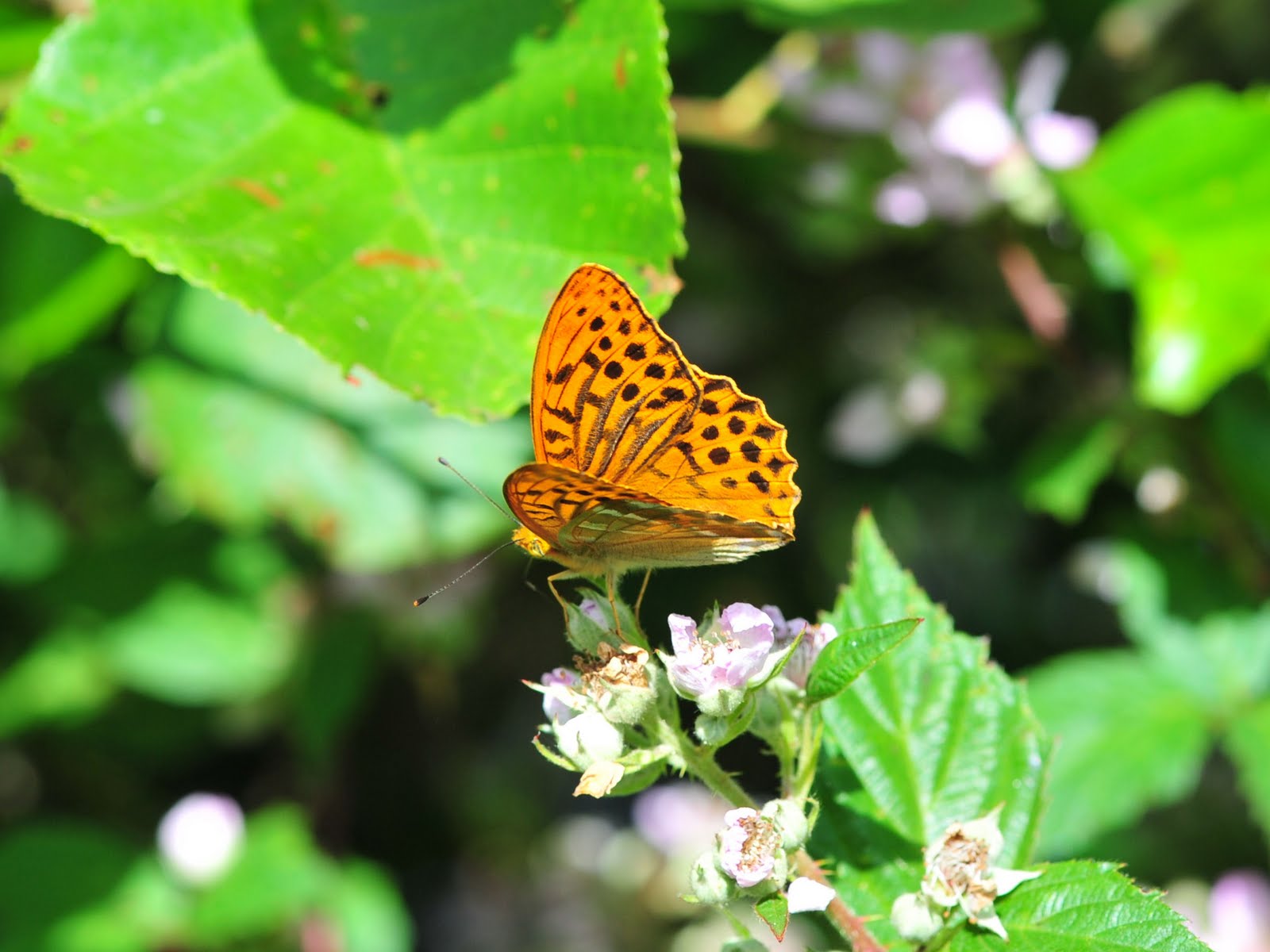
at long last there are signs that the butterflies are returning. At the top are two gate keepers fighting/and or mating. Below are two photos of one of my local favourites the silver washed fritillary,(a male showing the 4 androconial lines of the fore-wings). These are big powerful fliers that fly on the edges of woods and love brambles.
.

.At the bottom is the comma, possibly the second generation this year, and suddenly there are a lot of them. And the meadows were full of ringlets and meadow browns. A lovely day for the amateur lepidopterist.
.
Labels:
butterflies,
Inny valley,
insect life
monkey flower
Tuesday, July 06, 2010
Monday, July 05, 2010
Sunday, July 04, 2010
inner ringlet

further to the picture several days ago, this shows the upper wings of the ringlet butterfly. There are relatively few species of butterfly about at present, but there seem to be hundreds of moths about at night.
Labels:
insect life
Saturday, July 03, 2010
we all live in a yellow ...

the creamy yellow flowers of our native honeysuckle are bursting through the upper layers of the hedgerows, and above them a yellow hammer is singing his heart out.
Friday, July 02, 2010
adding a dash of colour


this is a young greater spotted woodpecker who is spending a lot of time in our garden. The parents may have nested in the cedar next to our house but it is very difficult to tell because the foliage is so dense.
Wednesday, June 30, 2010
life at the sharp end

this wasp has caught a small moth, and is presumably either going to eat it or feed it to the larvae in the nest. This is something I have read about but never actually seen in action. It caught my eye because I saw it struggling to fly off with its booty.
Labels:
insect life
Monday, June 28, 2010
spot goes fishing


Spot was fascinated by the streaks of marble in the bed of the Inny and after trying to paw them decided to try and fish them out. They are very obvious now because the river is very low, and the sun was very bright. He did not catch the brown trout below, which itself seems to have forgotten about camouflage only working against the right background.
Labels:
dogs,
flora,
Inny valley,
wildlife
ringlets

Yet again we saw very few butteflies, well we saw lots of meadow browns and ringlets (see photo) but almost nothing else despite the warm sun and lack of wind. Where are they all?
Labels:
Inny valley,
insect life
heath bedstraw and stitchwort

the meadows by the Inny are covered, unusually, in white flowers mainly clumps of heath bedstraw and lesser stitchwort, a very delicate version of the larger greater stitchwort. The meadow had a lovely smell of honey and lemons, although my main reference book states that heath bedstraw has a sickly smell. Not true! It is amazing how these meadows change year on year and how different species flourish or struggle. A few years ago the same meadow at this time was a blaze of yellow due to bird's foot trefoil, and last year it was full of ragged robin. It is gradually becoming covered in bramble and reeds.
. !
Labels:
flora,
Inny valley
Sunday, June 27, 2010
five spot burnet

although it looks like this moth has 6 spots, the forewings have 5 spots and the red hind wings give the impression of a sixth spot (Spot has only one spot). There is a very similar moth called the narrow bordered five spot burnet but only experts can tell them apart, and of course there is the six spot burnet. The butterfly orchids are out much later this year, and there seems to be a general paucity of butterflies. Below is a picture of a mixture of greater and lesser butterfly orchids in Greenscombe meadows.
Labels:
Greenscoombe,
insect life
Wednesday, June 23, 2010
even more things we haven't seen locally 6
these little chaps are know as gendarme beetles (Pyrrhocoris apterus, or fire bugs), either because of their colour, or more likely in my view because they all hang around together idling in the sun. They were everywhere, and it was not at all clear what they were doing but the reference on Wiki (link) suggests that they eat lime seeds, and these colonies were close to two enormous lime trees. They are obviously very sociable.
Labels:
insect life
even more things we haven't seen locally 5


A meadow fritillary, and a (?) Glanville fritillary (bottom photo). It turns out (according to my marvellous new butterfly reference book Collins Butterfly guide by Tolman and Lewington) that there are 46 species/sub species of fritillary butterflies in Europe, and they are very often hard to identify. So it could be a knapweed fritillary or a lesser spotted fritillary or ... but after a lot of counting of spots and examination of S sections we have made a decision!
Labels:
insect life
Tuesday, June 22, 2010
a few things we have seen locally 1

Spot doesn't usually spend much time in his garden, but this year the peonies have relished the unusual warmth and this is his all time favourite.
And even more exciting is this insignificant looking little flower. It is the first time our english walnut has flowered since it was planted on Good Friday, 1999. Reliable sources report that walnuts do not mature for 10 years or so. They self pollinate, so maybe we will be eating our own walnuts at the end of the year...just like France.
Labels:
flora,
interestingthings
a few things we haven't seen locally 4

and this is my favourite picture, a humming bird moth (aka macroglossum stellatarum, and one can see why ) drinking nectar from red valerian. These moths do sometimes make it across the channel, sometimes in large numbers but I have never seen one locally. Time to start planting some red valerian.
Labels:
insect life
a few things we haven't seen locally 3

and a bee hawk moth on a clary (wild or meadow) of some sort

The flower appears to have closed around a visiting hover fly in the bottom picture, I guess to improve pollination.
Labels:
Franceflora,
insect life
Monday, June 21, 2010
a few things we haven't seen locally 2
Labels:
Franceflora,
orchids
Subscribe to:
Posts (Atom)