Sunday, July 25, 2010

more from the meadows


throughout the meadows were these webs which look like little strips of polythene wrapped around the heads of knapweed. I think they contain the young of the spider in the bottom photo, but I cannot identify the species from this photo (and trawling through the field guide to spiders is not for the faint hearted)

butterfly counting


It was British butterfly counting day today, so we went to our favourite meadow and walked through it for 15 minutes. The brambles have almost finished flowering, but the meadow is full of knapweed and in a few days will be a blaze of purple. Like last Sunday we saw many species, including three that were absent last week, the common blue, the peacock (top photo, very resplendent indeed), and the holly blue (bottom photo).This is only the second time in 5 years that we have seen and photographed a holly blue. There were ringlets, various whites and meadow browns beyond count, and a dozen large silver washed fritillaries.

Tuesday, July 20, 2010

rainbow martins


after a very very wet day, the sun came out this evening to add a little background colour to the aerobatics

Monday, July 19, 2010

formation flying

it's that time of year again when newly fledged swallows are trying out and developing their aerial skills like a squadron of jet aircraft doing aerobatics.

Tuesday, July 13, 2010

blackbird bathing beauty


even its mother wouldn't recognise this dishevelled mess of feathers as a blackbird

Sunday, July 11, 2010

more purple and orange


today we saw 14 species of butterfly in one meadow :- ringlet, meadow brown, small heath, speckled wood, large white, marbled white, small white, comma (lots of them) silver washed fritillary, red admiral, small tortoiseshell, small skipper, small copper, and gatekeeper; admittedly all quite common but nevertheless that is about 1 in 5 of all our native species (and no blues). The photo above is of the very attractive small copper, and the photo below is of yet another purple flowering plant (less common than some of the others).

Saturday, July 10, 2010

the Liskeard show 2

the warm up ring for horses and riders.
.
a crowd of alpacas


.
big bulls

donkey judging
.

the Liskeard show

Liskeard is about 10 miles (16km) away from us. The show is quite big and full of rural interest, especially food and livestock. England (or Cornwall if you prefer) as it used to be, and simple pleasures enjoyed by all.
Judging the live stock

waiting our turn.

taking risks

donkey derby


.

Friday, July 09, 2010

purple patches 2


and these

purple patches 1


we have noticed that as it moves towards mid summer and later there are more and more wild flowers in the blue mauve purple part of the spectrum. There are of course still lots of plants that flower in yellow and white but is there something that favours the UV end of the spectrum at this time of year? Maximum marks to anyone who can name all of the wild flowers in these two posts that we came across on our walk yesterday.

Thursday, July 08, 2010

more butterflies


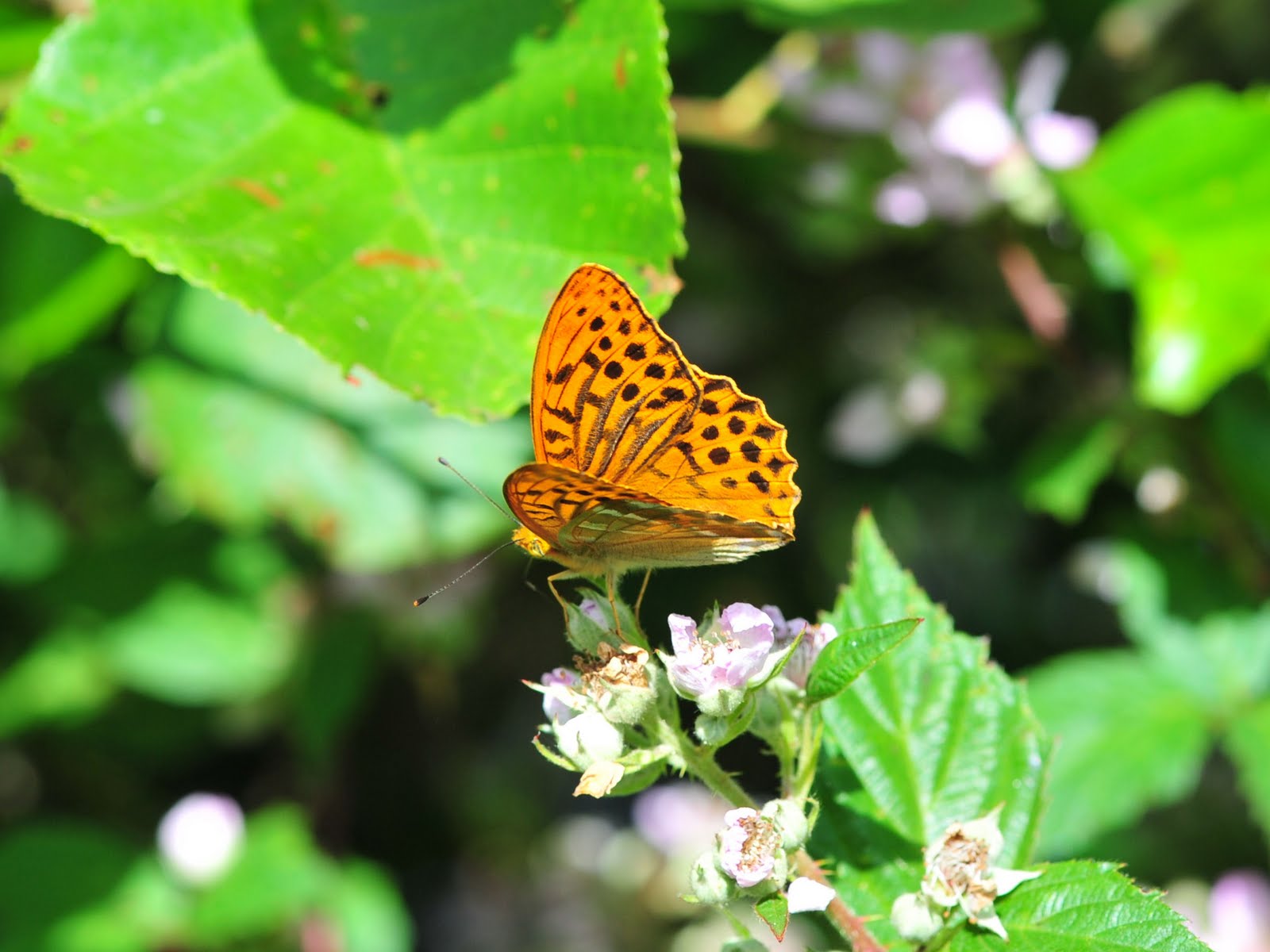
at long last there are signs that the butterflies are returning. At the top are two gate keepers fighting/and or mating. Below are two photos of one of my local favourites the silver washed fritillary,(a male showing the 4 androconial lines of the fore-wings). These are big powerful fliers that fly on the edges of woods and love brambles.
. .


At the bottom is the comma, possibly the second generation this year, and suddenly there are a lot of them. And the meadows were full of ringlets and meadow browns. A lovely day for the amateur lepidopterist.

.

monkey flower


naturalised but not native, mimulus or monkey flower, photograhed here growing in the middle of a very boggy piece of land, which fortunately has dried out enough to allow close access to show amazing flower and landing strip.

meadow dogs


lounging around in a meadow full of bird's foot trefoil, stitchwort and bedstraw

Tuesday, July 06, 2010

honeysuckle cottage


honeysuckle growing on the wall of Spike's house (just across the road from us)

Monday, July 05, 2010

Lynher walk 3


in the green cathedral

Lynher walk 2


let's all go down to the Hogweed and hang out (longhorn beetles)


or maybe we prefer the Bramble, it's quieter (male and female demoiselle agrion)

Lynher walk

some images from our walk today.

a slow fly past by a heron


a skipper taking a rest

Sunday, July 04, 2010

inner ringlet


further to the picture several days ago, this shows the upper wings of the ringlet butterfly. There are relatively few species of butterfly about at present, but there seem to be hundreds of moths about at night.

Saturday, July 03, 2010

we all live in a yellow ...


the creamy yellow flowers of our native honeysuckle are bursting through the upper layers of the hedgerows, and above them a yellow hammer is singing his heart out.

Friday, July 02, 2010

adding a dash of colour


this is a young greater spotted woodpecker who is spending a lot of time in our garden. The parents may have nested in the cedar next to our house but it is very difficult to tell because the foliage is so dense.

Wednesday, June 30, 2010

life at the sharp end


this wasp has caught a small moth, and is presumably either going to eat it or feed it to the larvae in the nest. This is something I have read about but never actually seen in action. It caught my eye because I saw it struggling to fly off with its booty.

Monday, June 28, 2010

spot goes fishing


Spot was fascinated by the streaks of marble in the bed of the Inny and after trying to paw them decided to try and fish them out. They are very obvious now because the river is very low, and the sun was very bright. He did not catch the brown trout below, which itself seems to have forgotten about camouflage only working against the right background.

ringlets


Yet again we saw very few butteflies, well we saw lots of meadow browns and ringlets (see photo) but almost nothing else despite the warm sun and lack of wind. Where are they all?

heath bedstraw and stitchwort


the meadows by the Inny are covered, unusually, in white flowers mainly clumps of heath bedstraw and lesser stitchwort, a very delicate version of the larger greater stitchwort. The meadow had a lovely smell of honey and lemons, although my main reference book states that heath bedstraw has a sickly smell. Not true! It is amazing how these meadows change year on year and how different species flourish or struggle. A few years ago the same meadow at this time was a blaze of yellow due to bird's foot trefoil, and last year it was full of ragged robin. It is gradually becoming covered in bramble and reeds.
. !